
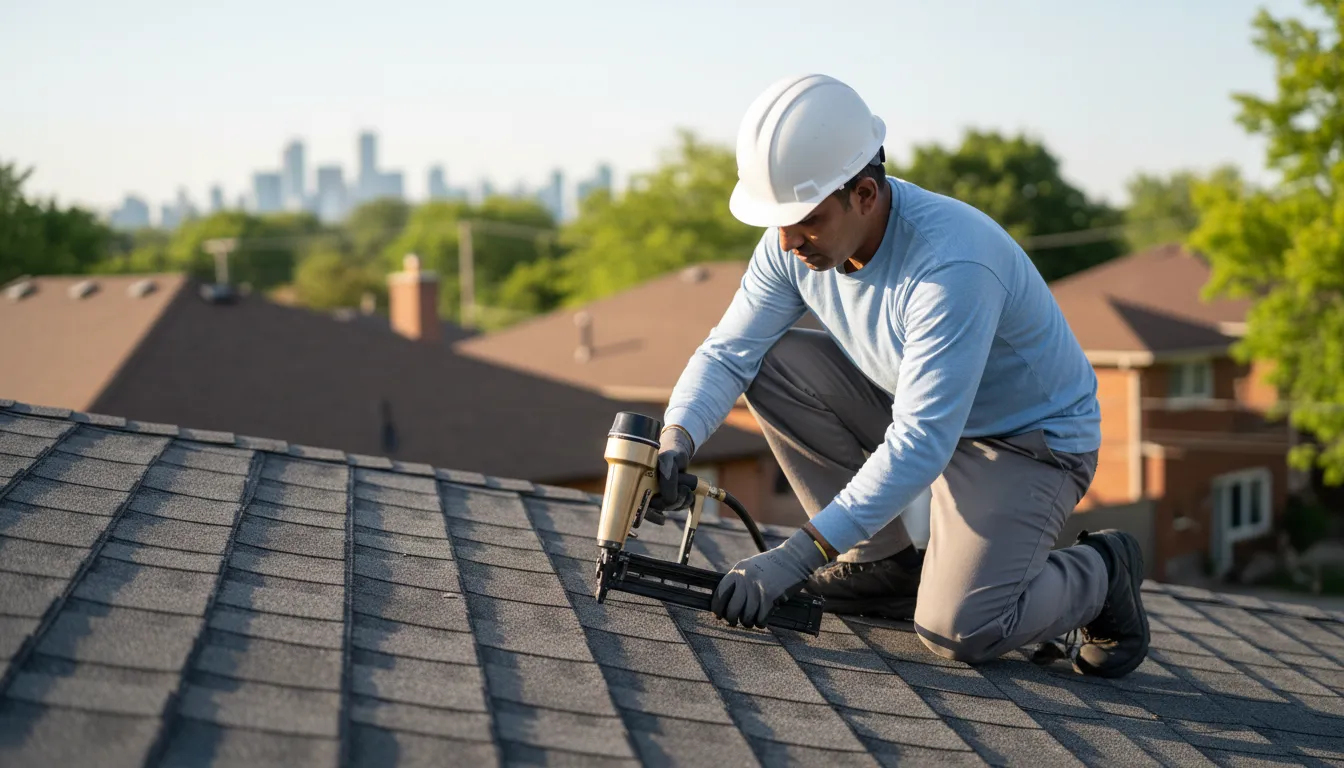
Storm & hail damage repair done right
Fast, careful storm & hail damage repair across Toronto neighbourhoods — email us for an inspection and quote
Email Us for a Free EstimateStorm & hail damage repair in Toronto
Toronto roofs face a long season of weather: spring storms, summer hail, and freezing rain in shoulder seasons. Storm & hail damage repair protects your home from leaks, structural rot and reduced curb value by addressing wind-lifted shingles and hail bruising. 416 Roofer inspects, documents and repairs damage with insurance-friendly reports tailored for Toronto properties. Acting quickly is important: some hail claims have time limits and damage is often invisible from the ground.
What this service covers
Storm & hail damage repair inspects and repairs wind-lifted asphalt shingles, damaged metal flashings, dented vents and soffit damage, and hail bruising to shingles and siding. We check underlayment integrity, ridge cap and eavestrough connections, and look for granule loss and bruises that can shorten shingle life. Repairs range from targeted shingle replacement to partial or full roof replacement depending on the extent of damage.
Signs you need help now vs what can wait
Immediate attention is needed when shingles are torn, flashing is loose, or interior staining appears after a storm — these are active failure modes that let water in. Cosmetic bruising or isolated granule loss without leaks can sometimes be monitored short-term, but we recommend an inspection because hail damage is often missed from ground level. Waiting increases the chance of secondary damage like rot, mold or compromised sheathing.
Why acting early saves money
Early detection prevents small failures from becoming large ones; replacing a handful of shingles and resealing flashings is less costly than repairing rot, insulation replacement or full deck replacement. Early documentation also strengthens insurance claims by recording damage before weather and wear obscure the evidence. For Toronto homes, early action avoids damage that can accelerate through freeze–thaw cycles.
Why local conditions matter
Toronto's mix of older neighbourhoods and newer builds means construction details vary — from older cedar understructures to modern plywood decking and synthetic underlayments. Hail size, wind direction and seasonal freeze–thaw all affect how fast damage progresses here in Toronto and nearby Mississauga and Vaughan. 416 Roofer knows local roofing assemblies and typical failure patterns for the GTA climate.
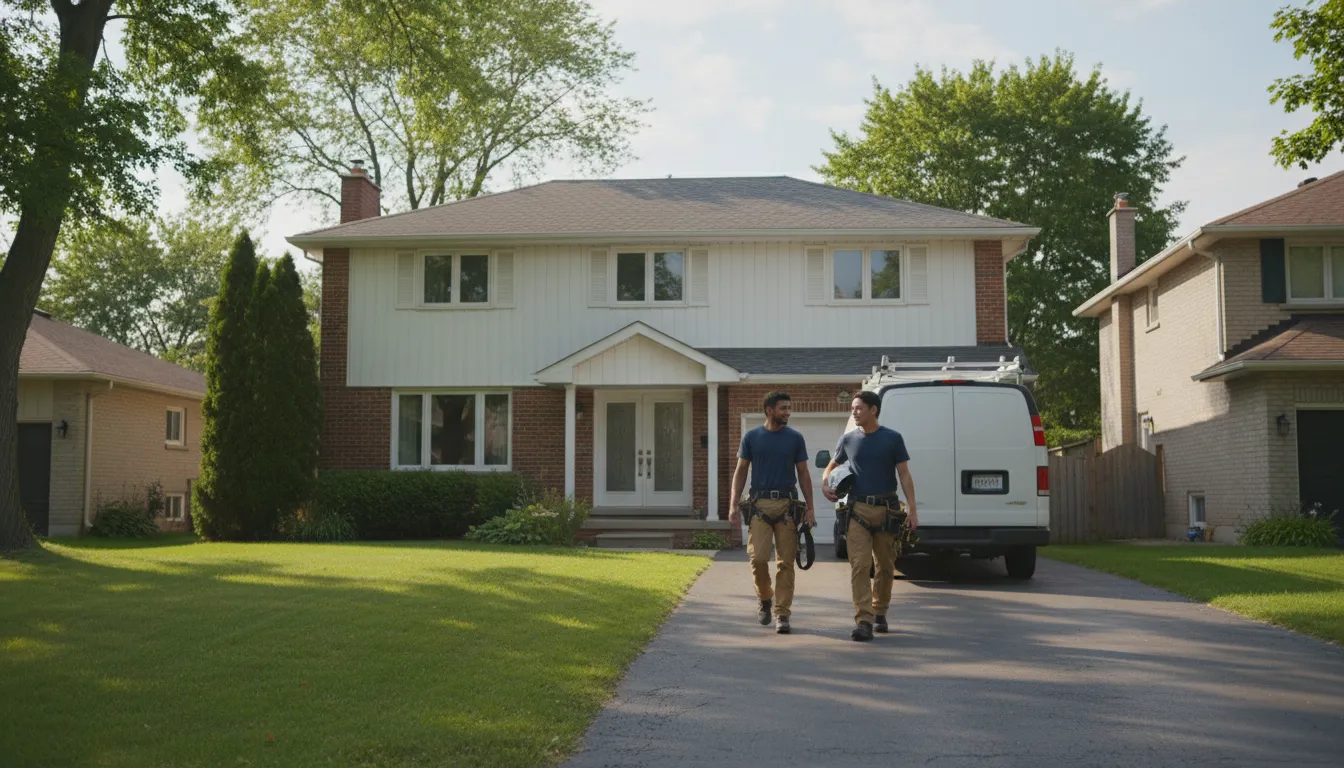
Types of Storm & hail damage repair We Handle in Toronto
Storm damage varies by material, roof age and construction. Below are the common repair approaches we offer for Toronto roofs, with practical notes on materials and suitability.
Flat & commercial roofing
Professional flat & commercial roofing from a licensed, insured local team.
Learn moreGutter installation & repair — Toronto
Professional gutter installation & repair — toronto from a licensed, insured local team.
Learn moreRoof inspection Toronto — 416 Roofer
Professional roof inspection toronto — 416 roofer from a licensed, insured local team.
Learn moreRoof leak repair
Professional roof leak repair from a licensed, insured local team.
Learn moreRoof repair Toronto — 416 Roofer
Professional roof repair toronto — 416 roofer from a licensed, insured local team.
Learn moreRoof replacement
When hail or wind damage is extensive, we offer phased or full re-roofing using contemporary materials like architectural shingles and upgraded underlayment. Best for homes with widespread granule loss or multiple compromised penetrations; provides long-term durability at a higher upfront cost.
Learn moreStorm & hail damage repair Toronto – 416 Roofer
Professional storm & hail damage repair toronto – 416 roofer from a licensed, insured local team.
Learn more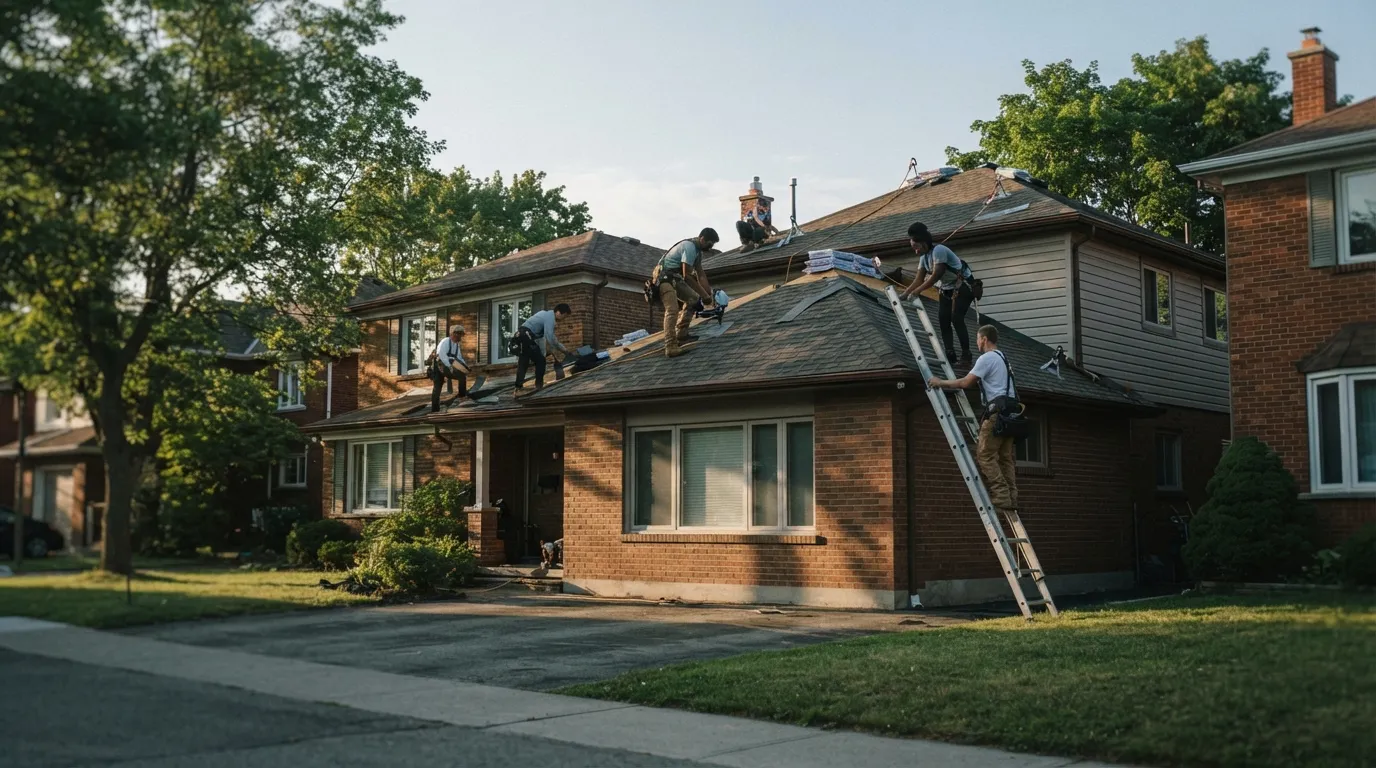
Request a no-obligation inspection and written assessment
Email Us for a Free Estimate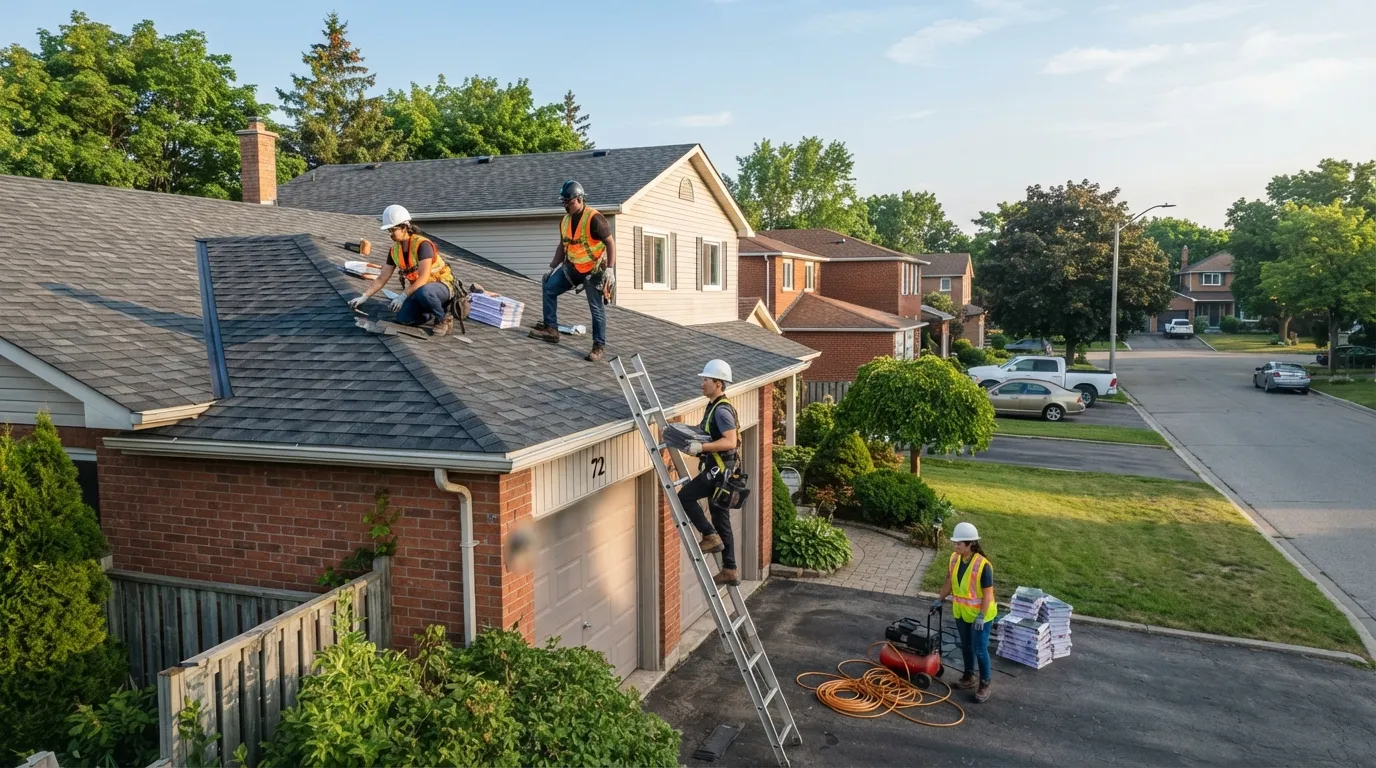
Storm & hail damage repair in Toronto
Toronto homes take a beating from seasonal storms: spring and summer thunderstorms, late-spring hail, and winter winds that loosen shingles. At 416 Roofer we inspect roofs, eavestroughs and exterior assemblies to find wind-lifted shingles, hail bruises to shingles and flashing damage that often hides from ground view. We work across Toronto neighbourhoods from the Beaches to Etobicoke and nearby Mississauga and York County suburbs, documenting conditions for insurance claims and advising on repair versus replacement. Early inspection matters — Ontario insurers often have time limits and many hail impacts are subtle until secondary leaks appear.
What this service covers
Storm & hail damage repair addresses wind-lifted, torn or missing asphalt shingles, bruised hail-damaged shingles, dented metal flashings, and damaged soffit, fascia and eavestrough components. We also check roof penetrations—vent pipes, chimneys, skylights—and patch or replace underlayment, ice-and-water shield, and flashing where water entry is likely. The work includes a documented condition report and photos suitable for insurance adjusters. If decking is compromised we note structural repairs as part of the recommended scope.
Signs you need attention now vs what can wait
Immediate attention is needed when you see missing shingles, granule loss concentrated in gutters, active leaks, or large dents in metal flashings—these indicate a breach that will worsen. Small hail bruises or stray lifted edges may be monitored if dry and not leaking, but in Toronto’s freeze-thaw cycles even minor damage can accelerate. If you’re planning a sale or making an insurance claim, document and act sooner rather than later. Routine patching can be a short-term fix, but only a full scope repair prevents repeated work.
Why acting early saves money
Addressing wind-lift and hail bruising quickly prevents water infiltration that rots roof sheathing and leads to costly structural repairs, insulation replacement and interior damage. Quick documentation and a clear written scope help smooth insurance claims so you’re not footing the full cost later. Repairing isolated areas with matching shingles is usually cheaper than full-roof replacement, but letting damage sit often increases the work required. In Toronto’s climate, prompt fixes avoid complications from snow accumulation and spring melt.
Why local Toronto conditions matter
Toronto’s position on the lakefront exposes roofs to lake-breeze winds and localized summer storms that produce hail and sudden gusts across neighbourhoods like Scarborough and North York. Older neighbourhoods in Etobicoke and parts of York County often have legacy roofing assemblies — tar-and-gravel valleys, older underlayments, or discontinued shingle profiles — that influence repair choices. Building practices and municipal code in Toronto shape allowed flashing methods and permit thresholds, so a local crew like 416 Roofer keeps repairs compliant and durable.
Why Choose 416 Roofer for Storm & hail damage repair
We’re a family-run team working across Toronto neighbourhoods with clear, written quotes and local knowledge. Our focus is straightforward: durable repairs, proper documentation for claims, and respect for your property.
Transparent written quotes
Every job starts with a written scope listing materials, labour and line-item descriptions so you know what’s included. We provide photos and a scope suitable for insurance submission alongside the quote.
No hidden fees
Our estimates spell out allowances for underlayment, flashing, and decking work so there are no surprise charges mid-repair. If unexpected issues come up, we explain options and seek approval before proceeding.
Cleanup commitment
We protect lawns, driveways and plantings with tarps and roof-edge protection, and we perform a magnetic sweep for nails and full jobsite cleanup. We leave the property tidy and take care of disposal of old materials.
Local Toronto crew
Our crews know Toronto microclimates and the common roof assemblies in neighbourhoods like the Annex, Leslieville and Don Mills. Local knowledge reduces guesswork and produces repairs that suit the streetscape and weather patterns.
Workmanship guarantee
We issue a workmanship statement with every repair outlining our commitment to install materials properly and return for remedial work covered by the guarantee. That promise covers our installation techniques and on-site quality controls.
Clear communication by email
We manage estimates, scheduling and documentation by email so you have a paper trail and clear timelines. If you prefer, we also provide photographic progress updates during the work.
Signs You Need Storm & hail damage repair in Toronto
Spotting storm and hail damage early saves your roof and your wallet. The items below are common signs we see across Toronto homes and what they usually indicate underneath.
Missing or curled shingles
When shingles are blown off or the edges curl, wind uplift has compromised the fastening and sealant strips. Underneath, the underlayment and deck can be exposed to water and may require replacement if left unchecked.
Granule-heavy gutters and downspouts
Large amounts of shingle granules in eavestroughs or at the base of downspouts point to hail bruising or loss from wind abrasion. This often means the shingle’s weather layer is depleted and the asphalt mat is exposed, shortening the roof’s life.
Dents in metal flashings and vents
Dents on metal flashing, vent caps or chimney caps are classic hail impacts that can allow water to track under edges. Even if shingles look intact, flashing dents can interrupt seals and cause hidden leaks.
Bruised but intact shingles
Shingles that show small, dark “bruise” marks from hail may still appear flat but have internal asphalt compaction. These bruises weaken the shingle and can split later, so they’re often recommended for replacement on larger-extent roofs.
Staining or watermarks on ceilings
Interior stains or fresh drips mean water has passed through the roof assembly to the attic or living spaces. This suggests failed underlayment, damaged flashing or compromised decking that needs prompt repair.
Loose or displaced ridge vents
Ridge vents knocked off or separated indicate wind uplift at the roof peak and can allow moisture and pests into the attic. Vent repairs often include checking the surrounding shingles and securing proper ventilation to prevent condensation damage.
Cracked or separated soffit and fascia
Soffit and fascia damage from impact or wind can create gaps where water bypasses the roof edge and undermines roof sheathing. Replacing these elements restores eaves protection and preserves the roof edge details.
How much does Storm & hail damage repair cost in Toronto?
How much does Storm & hail damage repair cost in Toronto?
Cost depends on several real factors: the roof area and slope, how many squares (100 sq ft units) are affected, the materials chosen (3-tab or architectural asphalt shingles, cedar shakes, or metal roofing), access and complexity (steep roofs, multi-level homes, or scaffolding needs), and whether decking or underlayment must be replaced once we remove damaged materials. Weather-related timing, like needing emergency tarping or winter workarounds, can also affect price. We provide a thorough on-roof inspection, a written itemized quote by email and photos so you can compare materials and scopes before making a decision.
Does my budget match the likely scope?
Think through whether you want a targeted repair of damaged areas or a full roof replacement — targeted patching is less expensive but may leave visible matches or mismatched shingles. If you plan to stay long-term, investing in higher-grade architectural shingles or improved underlayment pays off; for short-term ownership, a more economical repair may be appropriate.
What season or timing is best?
Late spring through early fall is the simplest time to do repairs in Toronto due to milder weather and lower risk of ice and snow. However, emergency tarping and temporary solutions are available in winter and early spring; those can protect the home until full repairs are possible. Factor in insurance timelines — claims often require prompt damage reporting.
Repair vs replace — when to choose each
Small areas with intact decking and flashing can often be repaired or patched successfully, which is cost-effective when damage is limited. Extensive hail bruising across many shingles, widespread granule loss, or compromised decking usually pushes the choice toward replacement for longevity.
Which materials should I pick?
Match materials to your roof’s slope, existing profiles and neighbourhood aesthetic; architectural asphalt shingles on a steep-slope Toronto home provide durability and visual appeal, while metal roofing works for long-run durability but costs more. Consider upgraded underlayment, ice-and-water shield in valleys and eaves, and higher-grade flashing when longevity and insurance resale are priorities.
How disruptive will it be to my home?
Repairs vary from one-day shingle patching to multi-day full replacements that involve staging materials and access equipment. Protect valuables, plan for noise, and keep pets and children away from work zones. If vehicle access or driveway parking is tight in your Toronto neighbourhood, discuss staging with us when you request a quote by email.
Do I need permits or code checks?
Most small repairs do not require permits, but structural or full-roof replacements may trigger municipal requirements or inspections in Toronto and neighbouring municipalities like Mississauga. We flag potential permit needs in our written quote so you can coordinate any required municipal inspections.
How much does Storm & hail damage repair cost in Toronto?
Costs are driven by the roof area, extent of damage, materials selected (3-tab, architectural shingles, or metal), access complexity and whether decking or underlayment must be replaced. Timing, emergency tarping, and municipal permit needs can also influence price. We perform an on-roof inspection and deliver a written, itemized quote by email so you can compare scopes before approving work.
How long will repairs take?
Small repairs or isolated shingle replacements can often be completed in a day, while full roof replacements typically take multiple days depending on size and site logistics. Weather in Toronto can affect scheduling, so we set timelines in the written quote and update by email if conditions change.
What materials and options do I have?
Common options include 3-tab asphalt shingles for cost-sensitive repairs, architectural laminate shingles for longer life and better wind resistance, metal flashing and roof vents, and upgraded underlayment or ice-and-water shield in critical areas. We explain durability trade-offs and aesthetic outcomes in the quote so you can choose appropriately.
Do I need permits or inspections?
Small repairs usually do not require Toronto permits, but full replacements or structural deck repairs may trigger municipal permits and inspections. We note likely permit needs in the written estimate so you know whether the job will involve the city’s process.
What warranty or guarantee comes with repairs?
We provide a workmanship commitment outlining our installation standards and the terms for remedial work covered by that commitment. Manufacturer material warranties are separate; we include material receipts and warranty information in the final email packet.
How should I prepare for the work?
Clear driveways and provide safe access for crews and a dumpster; remove fragile items from attics and near eaves. Make us aware of any access restrictions in your Toronto neighbourhood when you request the quote by email so we can plan staging appropriately.
Why do quotes vary between contractors?
Quotes differ because of scope detail, materials specified, fastening and flashing standards, allowance for deck replacement, and site protection measures. Transparent, itemized written estimates let you compare apples to apples — we send everything by email so you can review line-by-line.
Our Storm & hail damage repair Process in Toronto
We follow a clear five-step process to diagnose, document and repair storm and hail damage while keeping Toronto homeowners informed by email at every stage.
- 1
1. On-roof inspection and documentation
A trained roofer conducts a hands-on inspection of shingles, flashings, vents and eavestroughs, and photographs damage from multiple angles. We note suspected hail bruises, wind-lifted edges and any decking exposure, producing a report suitable for insurance.
- 2
2. Written scope and materials selection
We email an itemized quote with options for materials—3-tab vs architectural shingles, underlayment upgrades, metal flashing—plus allowances for decking replacement if required. The scope includes labour, cleanup and permit notes so you know the full plan before work begins.
- 3
3. Scheduling and pre-work protections
Once you approve the quote by email we schedule the work and plan site protections: tarps, plywood walkways, gutter covers and tree protection if needed in tight Toronto yards. We coordinate dumpster placement and confirm arrival windows by email.
- 4
4. Repair or replacement work
Our crews remove damaged shingles and flashings, evaluate decking, replace underlayment and install new shingles or metal where specified, following industry attachment and flashing techniques. We protect landscaping, use magnetic sweeps for fasteners and perform daily cleanup so your property remains safe.
- 5
5. Final walkthrough and insurance packet
After the work we email a final report with before-and-after photos, material receipts and a clear invoice to support your insurance claim. We do a walkthrough with the homeowner and address any remaining concerns documented in writing.
Professional Storm & hail damage repair Built for Toronto Conditions
Toronto’s range—from lake-effect microclimates to urban heat islands—affects how roofs wear and what repairs succeed long-term. 416 Roofer tailors repair choices to the city’s seasonal cycles, housing stock and municipal rules. We work on detached and semi-detached residential roofs, low-slope multi-family roofs and accessory structures, recommending materials and ventilation strategies to prevent recurring problems. Our approach blends practical prevention—ice-and-water shield, correct ventilation and quality flashing—with clear documentation for peace of mind.
Ontario climate stresses and seasonal cycles
Toronto experiences rapid temperature swings, spring hail, and freezing winters; these cycles stress shingles as thermal movement and moisture alternate. Hail causes localized asphalt compaction while freeze-thaw cycles exploit any weaknesses, so repairs must address both impact damage and water-shedding performance.
Local housing-stock considerations
Many Toronto homes are older and built with legacy roof assemblies or multiple overlay layers — these can hide damage between layers or require complete tear-off for proper repair. We assess historical materials, propose sympathetic matches for visible areas, and recommend full replacement when layering threatens roof performance.
Permits, code and municipality context
Repair versus replacement can influence whether Toronto building permits or inspections are required; larger roof replacements often trigger permit filings. We outline potential municipal steps in our written quote so homeowners in Toronto, neighbouring Mississauga or York County know what to expect.
Workmanship and standards we follow
We install underlayment, ice-and-water shield, step flashing around chimneys and valleys, and ridge ventilation following manufacturer attachment specs and industry best practices. Our workmanship includes proper fastener selection, correct nailing patterns and sealed flashing terminations to reduce the chance of future leaks.

Weather is hard on your roof — email us for a same-day inspection.
Fall roofing conditions in Toronto, ON
Fall is the critical prep window around Toronto, ON: clear gutters, reseal flashing, and fix loose shingles before freeze-thaw and snow load arrive.
Proudly Serving Toronto, ON
Local, on-time service throughout Toronto and the surrounding area.