
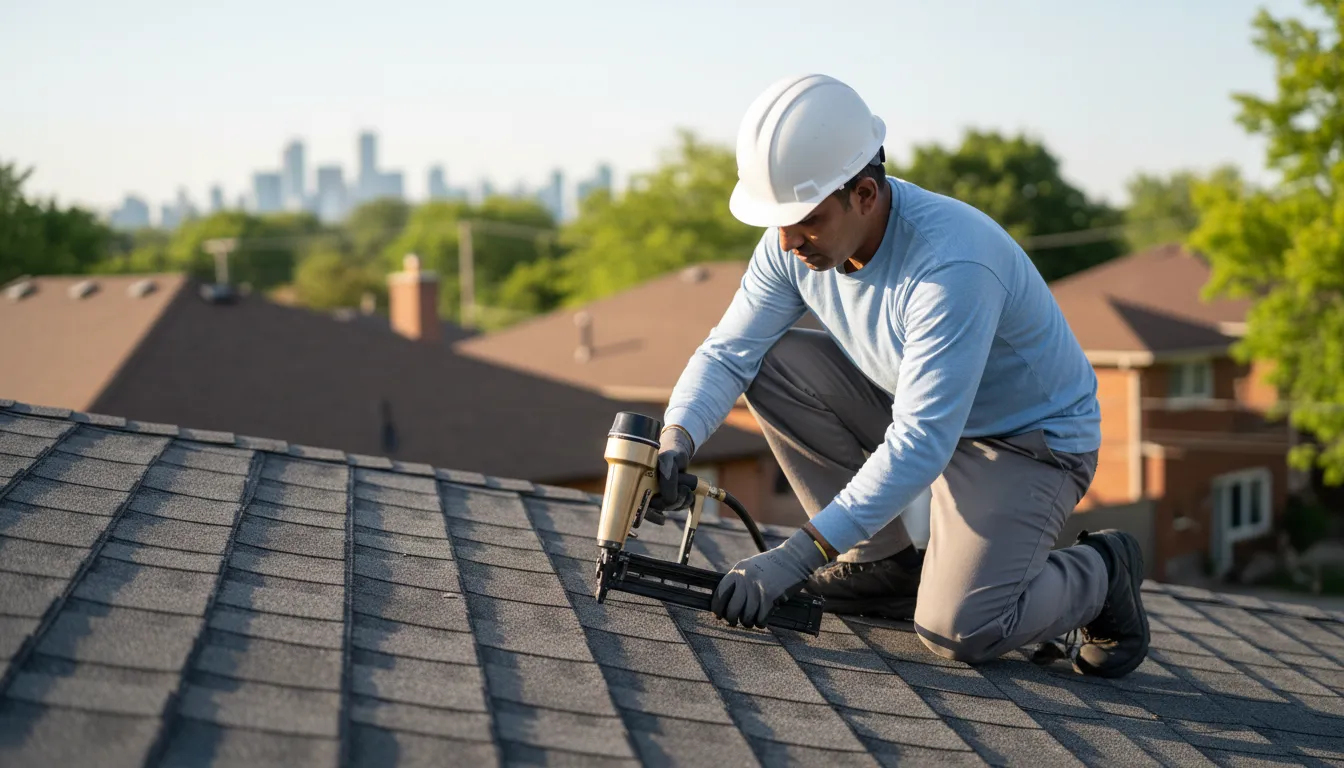
Roof replacement done right for Toronto homes
Full tear-off and re-roof options across Toronto neighbourhoods — email us for a written quote
Email Us for a Free EstimateRoof replacement in Toronto
Roof replacement in Toronto is a major home improvement: it protects your structure, improves energy performance, and preserves resale value. At 416 Roofer we approach each project with an eye to the city’s older neighbourhoods and seasonal stresses. We work across neighbourhoods from the Annex to Scarborough, and through the broader Toronto area into neighbouring Mississauga and Markham. Our scope covers full tear-off, decking repair, underlayments, flashing upgrades and final ventilation tuning.
What the service covers
A full roof replacement from 416 Roofer includes a complete tear-off of existing roofing down to the roof deck, inspection of the decking and replacement where required, installation of ice-and-water shield at eaves and valleys, synthetic underlayment across the field, installation of your chosen finish material (architectural asphalt shingles, metal panels, or tile), and professional ridge, soffit, and intake/exhaust ventilation balance.
Signs you need replacement now vs a repair
If your roof has widespread curling, multiple missing shingles, recurring interior stains, sagging roof planes, or a deck that’s soft to the touch, a repair will likely only be a short-term fix. Isolated shingle damage or a single leak over a small area can sometimes be repaired instead of replaced; we’ll help you weigh the long-term costs so you don’t patch repeatedly.
Acting early saves money
Replacing a roof before structural decking or insulation becomes water-damaged prevents secondary costs such as joist repairs, interior drywall replacement, and mould remediation. Early action also lets you choose higher-performance underlayments and ventilation systems to reduce heat loss in winter and heat gain in summer, which pays back over time through lower energy demand.
Why Toronto conditions matter
Toronto’s freeze-thaw cycles, heavy spring rains, summer heat and winter ice all stress roof systems in different ways than milder climates. Ice-and-water shield and proper eaves ventilation are essential here; local building details and neighbourhood housing stock (Victorian-era homes vs postwar bungalows) affect decking routes and flashing approaches.
Types of Roof replacement We Handle in Toronto
We install and replace a full range of roof systems to suit Toronto homes, from low-slope bungalows to steep heritage roofs. Below are the common options we deliver with material and performance notes.
Flat & commercial roofing
Professional flat & commercial roofing from a licensed, insured local team.
Learn moreGutter installation & repair — Toronto
Professional gutter installation & repair — toronto from a licensed, insured local team.
Learn moreRoof inspection Toronto — 416 Roofer
Professional roof inspection toronto — 416 roofer from a licensed, insured local team.
Learn moreRoof leak repair
Professional roof leak repair from a licensed, insured local team.
Learn moreRoof repair Toronto — 416 Roofer
Professional roof repair toronto — 416 roofer from a licensed, insured local team.
Learn moreRoof replacement
Professional roof replacement from a licensed, insured local team.
Learn moreStorm & hail damage repair Toronto – 416 Roofer
Professional storm & hail damage repair toronto – 416 roofer from a licensed, insured local team.
Learn more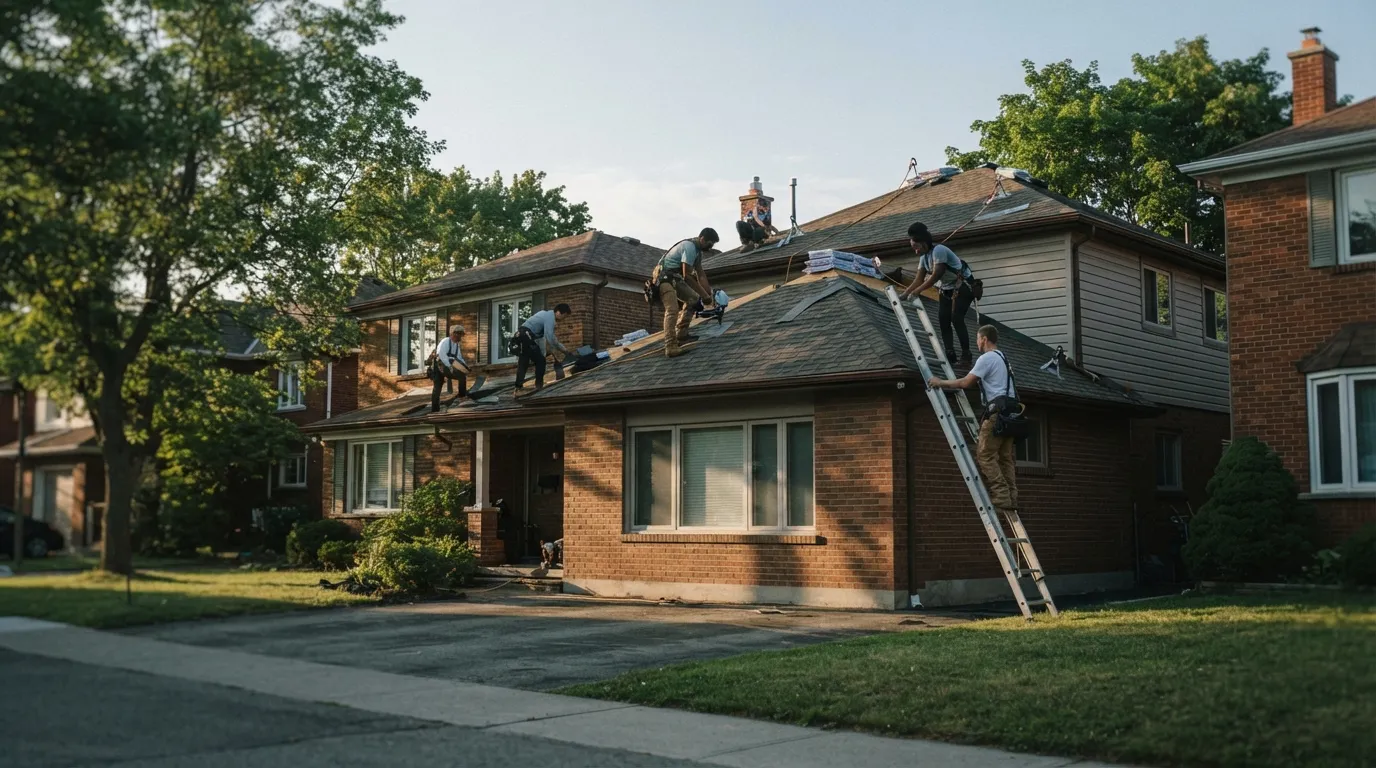
Request a no-obligation roof assessment and written quote by email
Email Us for a Free Estimate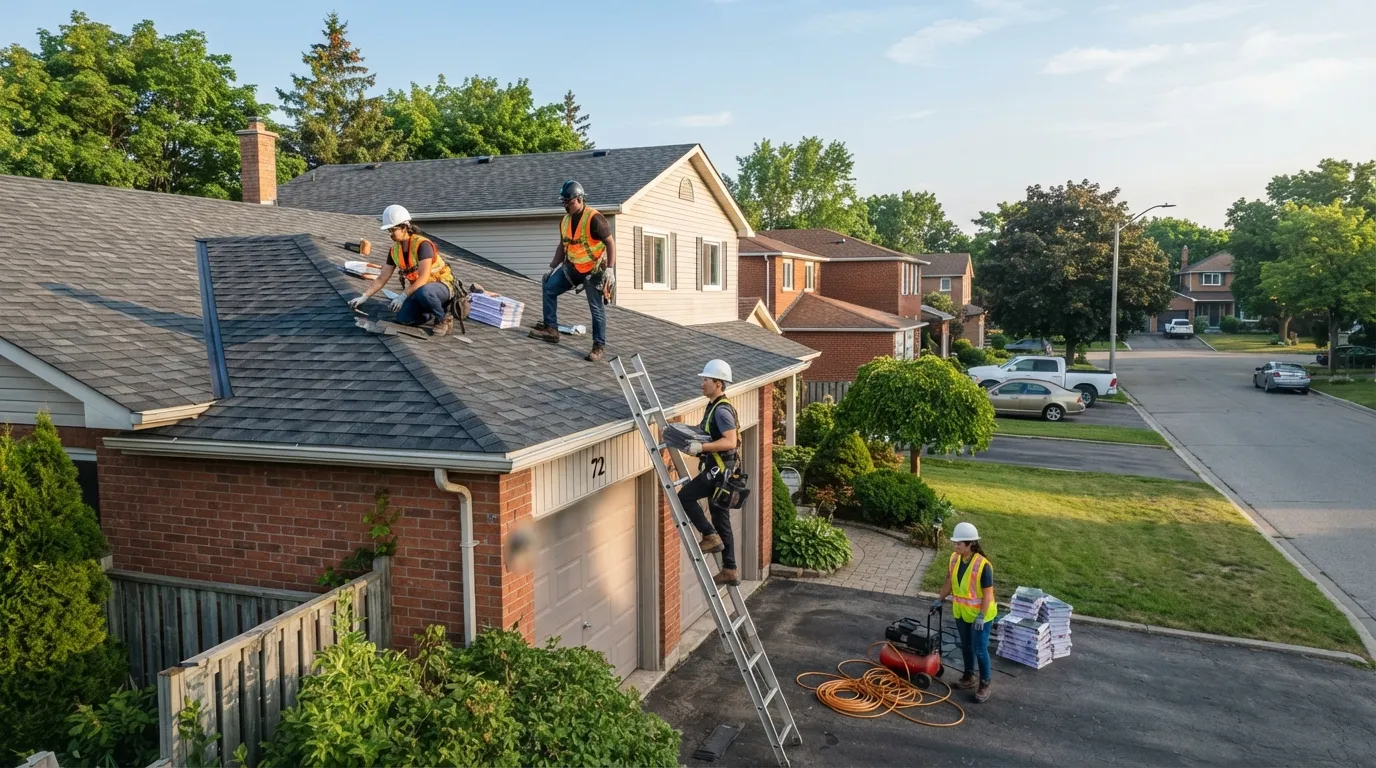
Roof replacement in Toronto
416 Roofer handles full roof replacement projects across Toronto — from detached bungalows in The Beaches to multi-storey homes in Leslieville and older semi-detached stock in Roncesvalles. We focus on full tear-off and re-roof work in asphalt architectural shingles, metal, and tile, including decking inspection and replacement, synthetic underlayment, ice-and-water shield, and proper ridge and soffit ventilation. Toronto’s climate and the variety of neighbourhood building types mean replacement is often the sensible long-term choice compared with repeated patch repairs. Below we explain what a complete roof replacement covers, when it’s time to replace, and how local seasons and building practices shape the job.
What a complete Roof replacement covers
A full tear-off and re-roof removes all existing roofing down to the roof deck, inspects and replaces damaged sheathing (plywood or OSB), and installs an ice-and-water shield at eaves and valleys. We fit a synthetic underlayment across the roof for secondary water protection, install starter course, architectural asphalt shingles or metal/tile panels as chosen, and finish with proper ridge cap, drip edge, flashing, and attic ventilation upgrades. Work includes flashing at chimneys, skylights, and dormers plus cleanup and a final walkthrough with documentation.
When replacement is needed vs a repair
Replace the roof when there’s widespread shingle granule loss, curling and splitting across large areas, repeated leaks, widespread decking rot, or when ventilation and insulation problems have caused pervasive damage. A local repair is appropriate for isolated leaks from flashing failure or small storm damage where the deck is sound and the surrounding roof is in good condition. We’ll recommend repair when it’s a cost-effective, durable solution and replacement when fixes would be temporary or risk hidden failures down the line.
Why acting soon usually saves money
Delaying replacement often lets moisture migrate into the deck and attic, leading to rot, mould, and insulation damage that require additional repairs and higher labour costs. Early replacement avoids secondary structural work and preserves waterproof layers like ice-and-water shield and underlayment integrity. In Toronto’s freeze–thaw cycles, an aging roof can fail rapidly after a severe winter or late-spring thaw, so timely action limits escalation of scope and cost.
How Toronto’s conditions affect your roof
Toronto’s weather — heavy snow loads in winter, sun and UV in summer, and frequent freeze–thaw cycles in shoulder seasons — stresses materials and ventilation systems differently than milder climates. Older neighbourhoods such as Cabbagetown or Riverdale often have legacy roof decks and complex rooflines that require careful decking repair and step flashing. Building code and permit practices vary across Toronto and nearby municipalities like Mississauga or Vaughan, and we account for that when preparing scopes and schedules.
Why Choose 416 Roofer for Roof replacement
We’re a family-run local team that treats each Toronto roof like it’s on our own street. Here are the practical reasons homeowners choose us for full roof replacement.
Transparent written quotes
Every Roof replacement starts with a detailed, itemized written estimate so you know exactly what’s included — materials, decking work, ventilation upgrades and permits. We explain the choices and how each affects long-term performance and cost.
No hidden fees
We outline allowances and potential contingencies like deck replacement so there are no surprises when the scope changes after inspection. If we find extra work is needed, we present options and written change orders before proceeding.
Thorough cleanup commitment
We protect driveways, landscaping and neighbourhood sidewalks with magnetic sweep, roofers’ felt drop cloths, and debris chutes. Our crews leave your property broom-clean and collect all fasteners and scrap materials for environmentally responsible disposal.
Local Toronto crew
Our crews live and work in Toronto neighbourhoods and understand local roof forms, from low-slope porches to steep heritage gables. That local knowledge speeds up accurate estimates and practical installation choices for Toronto homes.
Workmanship guarantee
We stand behind our installation practices for flashings, vents, and ventilation to ensure the roof performs through Toronto winters and summer heat. Our workmanship focus reduces callbacks and extends the life of the new roof assembly.
Clear communication by email
We receive project inquiries and manage scheduling and proposals by email to keep a clear written record for homeowners and the crew. Email-first communication is convenient for documentation and follow-up through permit stages and final walkthroughs.
Signs You Need Roof replacement in Toronto
If you see any of these signs, it’s time to arrange a professional assessment. Each symptom points to different failure mechanisms that replacement addresses.
Widespread curled or missing shingles
Large areas of curling, splitting, or missing architectural shingles indicate loss of weatherproofing and UV degradation. Under the surface, the underlayment and deck may be brittle or compromised, so patching won’t restore long-term protection.
Granules in gutters and downspouts
Significant shingle granules collecting in eavestroughs and at roof edges show the shingle’s protective surfacing has worn off. Underneath, the asphalt mat is exposed and will deteriorate faster, often requiring full replacement rather than spot fixes.
Repeated leaks or multiple patched spots
If leaks recur in different locations or after repairs, flashing or widespread deck issues are likely. Replacement lets us reinstall step flashing, valley flashing, and chimney counters and ensure the deck is sound so leaks don’t return.
Soft or sagging roof deck
A deck that feels springy or shows visible sagging means rot or structural compromise of plywood/OSB sheathing. Replacing shingles without repairing or replacing the decking leaves the home at risk for more serious structural damage.
Ice dams and interior water staining
Regular ice dams in winter and staining on ceilings suggest poor eaves ventilation or inadequate ice-and-water protection. A full replacement allows us to add ice-and-water shield at eaves, improve attic ventilation, and install proper insulation details to reduce reoccurrence.
Age and mismatched repairs
Roofs with numerous patches, isolated flashings, or mixed materials often hide inconsistent performance and aged layers underneath. For many Toronto homes, especially those older than typical shingle lifespans, a managed full replacement yields longer-term value than continual patching.
Rusty or failing flashings and metalwork
Rusted step flashing, valley metal, or vent collars can create leak points even if shingles look acceptable. Replacing the entire system allows installation of new metal flashings and retrofitting of proper counterflashing around chimneys and skylights.
New roofline or renovation plans
When you’re planning an addition, dormer, or a change in roof material, replacing the entire roof ensures consistent deck height, flashing continuity, and ventilation balance across the whole house. This avoids mismatched performance between old and new areas.
Frequently Asked Questions
How much does Roof replacement cost in Toronto?
Cost depends on several factors rather than a single price: total roof area and complexity (hip, valley, dormers), material choice (architectural asphalt shingles, standing-seam metal, or concrete/ceramic tile), accessibility and steepness of the roof, and whether the decking or structural members require replacement. Seasonal timing and permit requirements in Toronto can also affect labour availability and scheduling. We provide a written, itemized quote after an on-site inspection or a thorough photographic assessment so you understand the scope and potential contingencies before work starts.
Is my budget aligned with full replacement?
Determine whether you can fund a full replacement or if an interim repair is acceptable. If the roof is structurally sound and the problem is isolated, a targeted repair can be the right choice until replacement is practical.
When is the best season for replacement in Toronto?
Late spring through early fall is often easiest for scheduling, but Toronto’s shoulder seasons can work with proper planning. Avoid major shingle runs during heavy winter weather; timing affects lead times on materials and crew availability.
Replace now or repair and wait?
Ask whether repairs will reliably last through another season or if underlying deck or ventilation issues will worsen. If leaks recur or deck decay is present, replacement saves money and disruption over the medium term.
Which material suits my home and budget?
Consider long-term performance: architectural asphalt shingles offer good value and compatibility with most Toronto rooflines; standing-seam metal suits modern designs and sheds snow well; concrete tile suits steep slopes but adds dead load. Choose based on expected lifespan, roof pitch, and neighbourhood character.
How disruptive will the work be at my property?
Roof tear-off creates noise and requires staging, scaffold or ladders, and drop cloths; gardens, driveways and street parking may be affected. Plan for crews accessing the property and discuss protection measures to minimise impact on daily routines.
What about permits and code requirements?
Many Toronto roof replacements need permits or at least compliance with local building code for ventilation, eaves protection, and fastening. We consider permit paths and inspection timelines when preparing a schedule and budget so you’re not surprised by municipal requirements.
How much does Roof replacement cost in Toronto?
Cost depends on several factors rather than a single price: total roof area and complexity (hip, valley, dormers), material choice (architectural asphalt shingles, standing-seam metal, or concrete/ceramic tile), accessibility and steepness of the roof, and whether the decking or structural members require replacement. Seasonal demand and the need for permits or inspections in Toronto can influence lead times. We provide a detailed written quote after an inspection — the quote lists materials, labour, and any contingency allowances so you understand the final scope.
How long does a Roof replacement typically take?
A typical full tear-off and re-roof for a standard detached house in Toronto takes several days of on-site work once decking issues are known. Timelines expand if decking replacement, complex flashing or permit inspections are required. We outline a project schedule in the written scope and keep you updated by email.
What material options do I have for replacement?
Common choices are architectural laminated asphalt shingles for value and wide availability, standing-seam metal for longevity and snow-shedding, and concrete or clay tiles for steep slopes and a distinctive look. Each option has trade-offs in weight, lifespan and cost; we explain these in your written estimate and recommend based on roof pitch and neighbourhood character.
Will I need a permit or inspection in Toronto?
Many roof replacements do require permits or at least adherence to local building codes related to ventilation, ice-and-water protection, and fastening. Permit requirements can vary with the scope, and we account for the submission and inspection timeline when preparing the project schedule and quote. We communicate permit steps and outcomes by email so you have documentation.
What warranties or guarantees come with Roof replacement?
We provide written documentation of the installation scope and workmanship commitments, and we explain manufacturer material warranties for the chosen roofing product. Our workmanship practices aim to meet or exceed typical warranty requirements and we document care and maintenance recommendations in the final paperwork.
How should I prepare my home before crews arrive?
Clear driveways, move vehicles, and trim plants near the roofline so crews can access ladders and scaffolding safely. Secure attic contents and inform us of any special access concerns; we’ll email a checklist before start day so you know what to expect.
Why do quotes vary between contractors?
Quotes differ based on inspection thoroughness, assumed decking condition, quality of materials and underlayment specified, scope of flashing and ventilation work, and whether the contractor includes removal, disposal and permit handling. We provide itemized quotes so you can compare apples-to-apples and feel confident in the scope you’re purchasing.
Our Roof replacement Process in Toronto
We follow a clear, documented process so Toronto homeowners know what to expect from assessment through final sign-off.
- 1
Roof assessment and inspection
We inspect the roof deck, attic, ventilation, and flashing, checking for rot, insulation issues, and ventilation imbalances. Photos and measurements form the basis of a written scope and allow accurate materials takeoff.
- 2
Written scope and options
You receive an itemized proposal outlining materials (shingle type, underlayment, ice-and-water shield), decking work, ventilation upgrades, and permit needs. We include contingency allowances and explain choices so you can make informed decisions.
- 3
Scheduling and permit coordination
We handle permit submissions and coordinate inspection windows with the City of Toronto when required, and we schedule work to fit your availability and local weather considerations. Email communications keep the timeline and any changes clear and documented.
- 4
Tear-off, decking repair and installation
Crews perform a full tear-off down to the deck, replace any damaged plywood or OSB, install ice-and-water shield at eaves and valleys, lay synthetic underlayment, and install chosen roofing material with proper flashing and ventilation. We use protective measures — felt, debris chutes, and magnetic sweep — to protect property and neighbours.
- 5
Final walkthrough and documentation
After cleanup we complete a walkthrough with the homeowner, review installed materials and ventilation changes, and provide written documentation including care recommendations and warranty information. We stay available by email for follow-up questions and seasonal checks.
Professional Roof replacement Built for Toronto Conditions
Toronto’s mix of older housing stock, high-rise edges, and dense neighbourhoods demands roof replacements designed for local weather and construction types. 416 Roofer adjusts assemblies for snow loads, freeze–thaw cycles, and ventilation practices common to Toronto attics. We work on residences across neighbourhoods like the Annex, Scarborough, and High Park, and we coordinate with nearby municipalities such as Mississauga and Vaughan when permit or access differences arise. Our focus is on installations that last and on communication by email so you have a full record of decisions and specifications.
Ontario climate stresses
Toronto experiences heavy snow, periodic ice storms, summer heat and UV exposure that accelerate shingle ageing and create ice-dam risk. We specify ice-and-water shield at eaves and valleys, proper attic ventilation (ridge and soffit balance), and underlayment choices that withstand freeze–thaw cycles to reduce future failures.
Local housing-stock considerations
Many Toronto homes have complex rooflines, historic flashing details, and layered roofs from previous work. We inspect for mismatched layers, uneven deck heights and legacy chimney details so the replacement results in continuous flashing and reliable water shedding.
Permits and code context
Roof replacement often triggers code requirements for ventilation, eaves protection and fastening methods; Toronto’s permit and inspection routines inform scheduling and documentation. We prepare permit-ready scopes and work with inspectors to keep projects moving on local timelines.
Workmanship and material standards
We use widespread industry materials — architectural laminated shingles, standing-seam metal panels, and clay/concrete tiles — installed with manufacturer-recommended fasteners, underlayment and flashing practices. Our crews follow installation sequences that prioritize deck protection, continuous ventilation, and watertight flashing to meet homeowner expectations and local conditions.
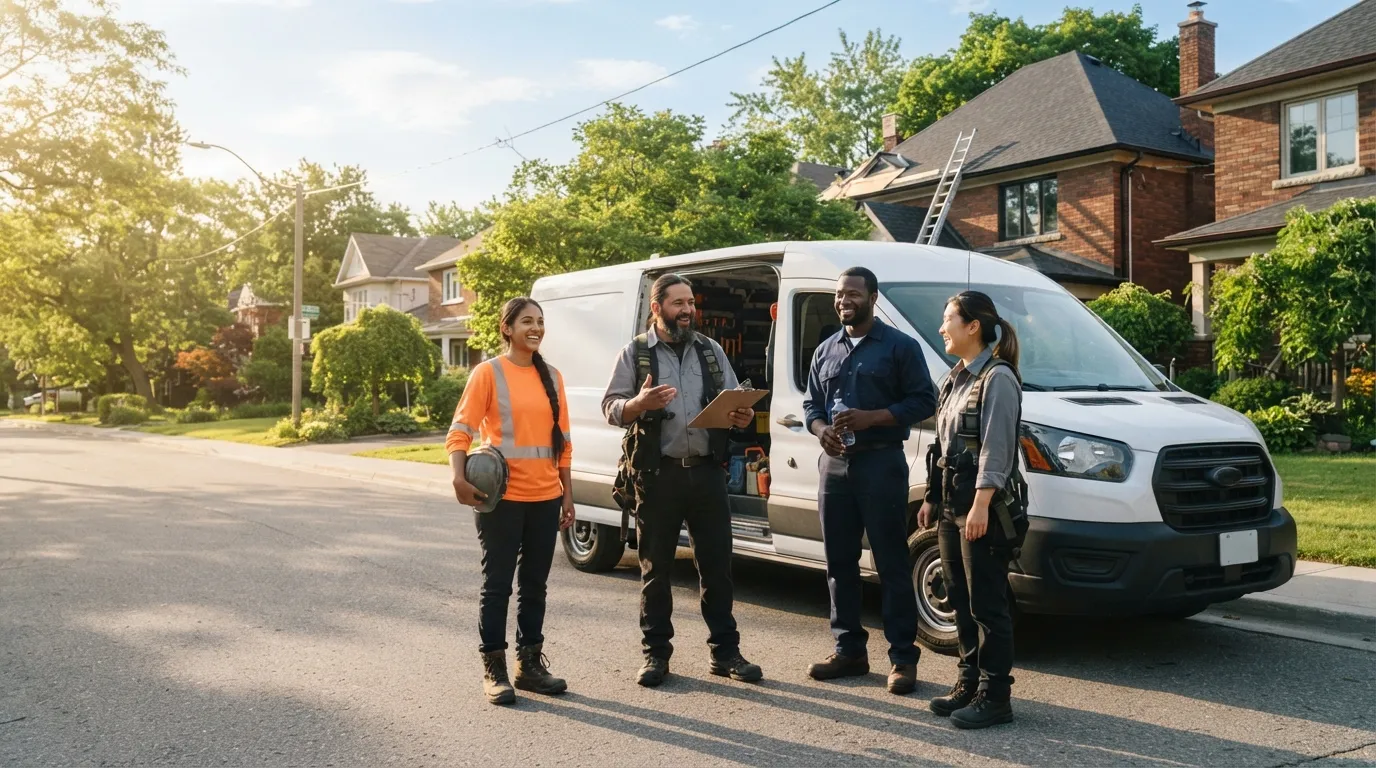
Weather is hard on your roof — email us for a same-day inspection.
Fall roofing conditions in Toronto, ON
Fall is the critical prep window around Toronto, ON: clear gutters, reseal flashing, and fix loose shingles before freeze-thaw and snow load arrive.
Proudly Serving Toronto, ON
Local, on-time service throughout Toronto and the surrounding area.