
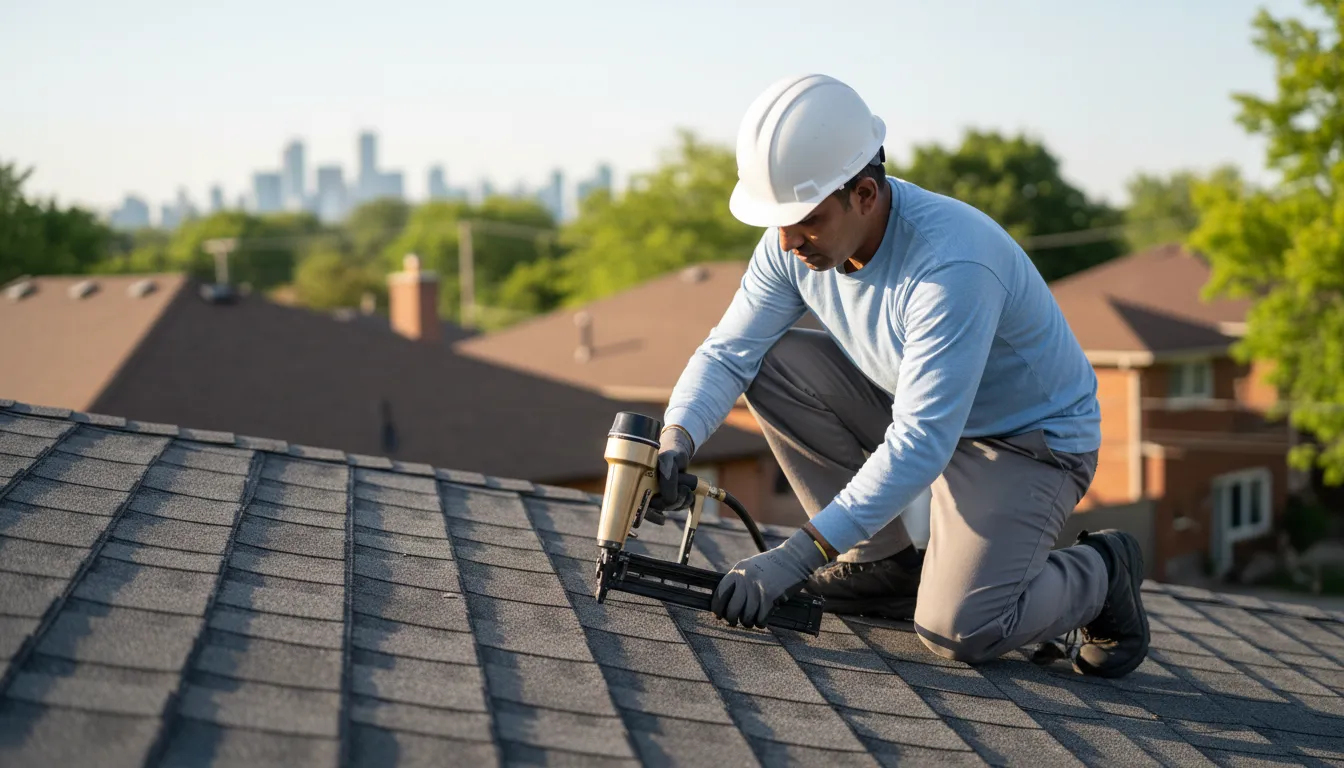
Flat & commercial roofing done right
Reliable low-slope roofing for Toronto homes and businesses — email us for a quote
Email Us for a Free EstimateFlat & commercial roofing in Toronto
Flat & commercial roofing in Toronto covers a range of low-slope systems used on commercial buildings, multi-unit housing, and some residential back additions or porches. Understanding material choices and drainage details matters here — Toronto’s climate and roofing stock mean a one-size-fits-all approach doesn’t work. As a family-run neighbourhood business, 416 Roofer works with property owners from downtown to the outer suburbs to design low-slope roofs that last. Below we outline what we handle, when to act, and why local knowledge saves money over time.
What this service covers
We install and repair TPO, EPDM, and modified bitumen systems as well as built-up roofing and insulated membrane assemblies for low-slope roofs. Work includes replacement and reinforcement of roof decks, vapour control, insulation upgrades (polyiso or cover board), flashings, perimeter metal, roof drains, scuppers and expansion joints. We also manage transitions to pitched roofs and roof-mounted equipment curbs and walkways.
Signs you need work now versus a temporary repair
Active ponding, split seams, large membrane blisters, recurring leaks, or visible rot at roof edges indicate an urgent replacement or targeted system repair. Smaller punctures, isolated membrane tears, or flashing failures can sometimes be fixed with a patch or localized re-seaming. We’ll help you weigh a repair versus replacement based on remaining membrane life, insulation condition and long-term costs.
Why acting early saves money
Addressing seam deterioration, flashing failures, and drainage issues early prevents water migration into insulation and the roof deck — those problems escalate repair costs quickly. Replacing a limited patch later often reveals widespread insulation saturation that forces full-system replacement. Proactive maintenance and seasonal checks reduce emergency repairs during Toronto’s freeze-thaw cycles and heavy spring rains.
Why Toronto conditions matter
Toronto’s mix of older masonry stock and newer low-rise commercial buildings creates varied roof details and penetrations. Cold winters and hot humid summers stress membranes, adhesives and metal flashings differently across the year. Local installation techniques — proper scupper detailing, tapered insulation for drainage, and attention to expansion joints — are essential for longevity in Toronto’s climate.
Problem this service solves
Flat & commercial roofing failures often start with seam breakdown, ponding water and improper drainage details. Low-slope membranes like TPO, EPDM and modified bitumen rely on good seam adhesion and uninterrupted drainage; when seams open, water can sit against insulation, causing saturation, mould and structural decay. Scupper and drain blockages, or lack of tapered insulation, cause chronic ponding that accelerates membrane wear and hides hidden damage beneath.
How 416 Roofer fixes it
We tackle these failure mechanisms by starting with a detailed inspection focused on seam integrity, membrane condition, insulation performance and drainage pathways. Repairs use compatible re-seaming techniques (hot-air welding for TPO, adhesive or mechanically fastened EPDM details, torch- or cold-applied modified bitumen where appropriate), plus replacement of saturated insulation and installation of tapered polyiso to promote positive drainage. For new installs we specify proper edge metal, counterflashing into masonry, secondary drains or scuppers and rooftop walkway pads so maintenance access doesn’t shorten the roof life.
Our Flat & commercial roofing Process in Toronto
We follow a clear, documented process for every flat and commercial roofing job so property owners know what to expect from assessment to handover.
- 1
Initial inspection and assessment
We inspect the roof surface, seams, flashings, drains, insulation and decking, and document findings with photos. This assessment identifies immediate risks like active leaks or saturated insulation and frames a scope for repair or replacement.
- 2
Written scope and detailed quote
We prepare a transparent written scope that lists materials, methods (welding, adhesive, or torch), required permits and exclusions. The quote explains cost drivers so you can compare options and decide whether a local repair or full system replacement is the right move.
- 3
Scheduling and permit coordination
Once you approve the scope we coordinate timing with your building management and arrange required permits or condo board notifications for Toronto properties as needed. We schedule the work to avoid extreme weather windows and to align with building access constraints in local neighbourhoods.
- 4
Installation and site protection
On site we protect landscaping and interiors, set up scaffolding or hoisting for membrane and insulation deliveries, and isolate work areas on the roof with walkway pads. Installation follows the specified system: re-seaming, insulation replacement, tapered systems for drainage, metal flashings and roof drains installed per code.
- 5
Cleanup and waste disposal
We remove old membranes, saturated insulation and construction debris and dispose of materials responsibly at approved facilities. The site is swept, and work areas are left ready for property use.
- 6
Final walkthrough & documentation
We complete a final walkthrough with property owners or managers, demonstrate new details (drains, scuppers, warranties) and provide the written closeout package. Documentation includes material records, photos, and recommended maintenance intervals to protect your investment.
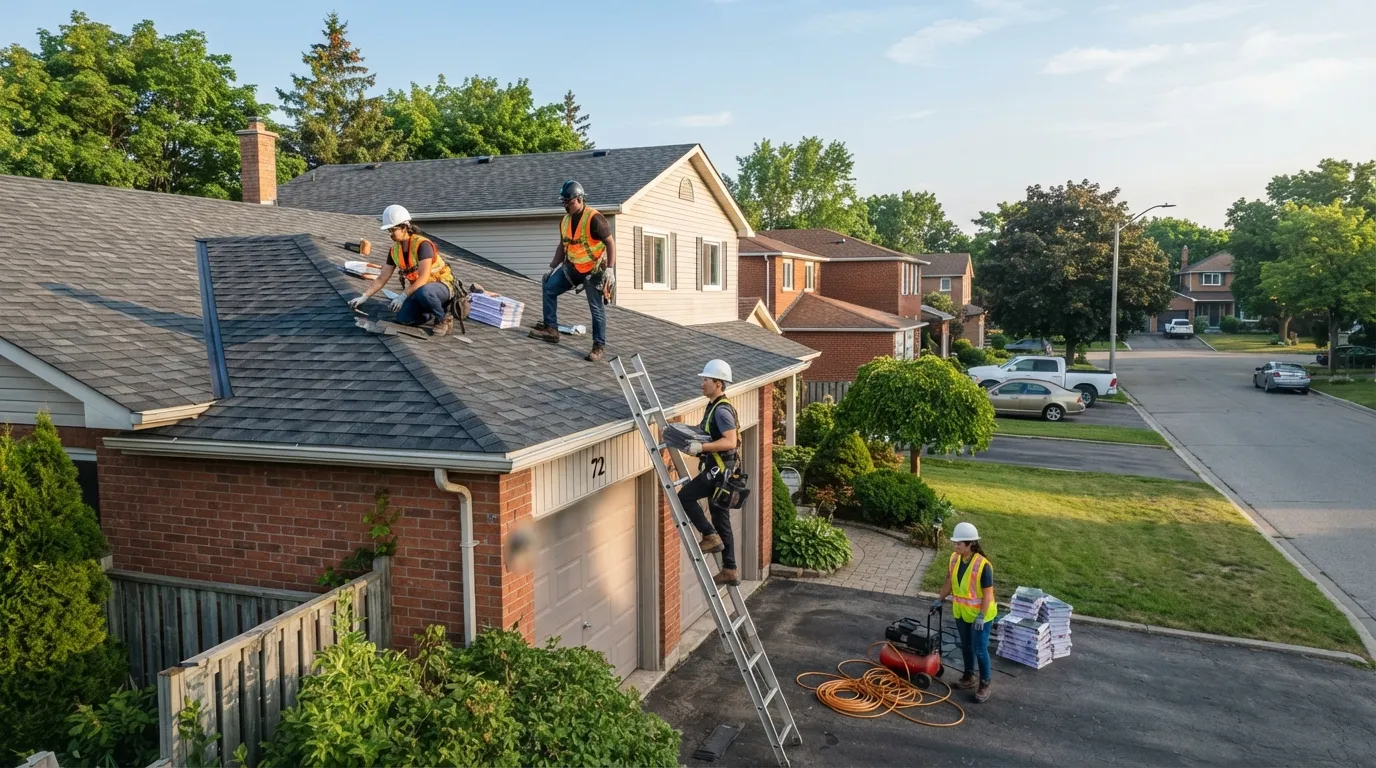
Flat & commercial roofing in Toronto
Toronto’s mix of low‑slope commercial buildings, apartment blocks and some residential flats means flat & commercial roofing is a frequent, important investment for property owners across the city. At 416 Roofer we treat every roof like part of our neighbourhood — protecting storefronts, mid‑rise apartments and attached houses from ponding water, seam failure and freeze–thaw damage. The city’s climate and building stock change how we specify membranes, flashings and drainage, so our guidance focuses on durable materials and practical maintenance. Below are the key choices, seasonal risks and why acting early saves money on repair bills.
What this service covers
Flat & commercial roofing includes membrane removal and replacement, patch and seam repairs, roof drainage upgrades (scuppers, internal drains and tapered insulation), vapour control and flashing details around curbs, parapets and rooftop equipment. We work on TPO membranes, EPDM single‑ply and modified bitumen systems, and handle rooftop coatings and insulated recover assemblies where appropriate. For commercial properties, we also coordinate with building managers on rooftop access, mechanical curb work and staged shut‑downs.
Signs you need work now versus what can wait
Immediate attention is needed for active leaks, large areas of ponding water after rain, open seams, or visible blisters and buckling of the membrane. Cosmetic blisters, minor seam lifting or small, isolated patches may be monitored short term with repairs if they’re accessible and the substrate is sound. We’ll explain which situations are temporary fixes and which require full reroofing so you can balance budget and long‑term risk.
Why acting early saves money
Addressing seam repairs, flashing failures and drainage problems early prevents water infiltration that leads to rot in roof decks, corrosion of metal components and costly HVAC or interior finishes damage. A targeted repair or roof‑over can extend service life for a few seasons, but delaying when the deck is failing usually pushes you to a full tear‑off later. We assess membrane condition, insulation wetness and deck health to show where short‑term fixes are appropriate and when replacement is the smarter investment.
Local conditions that change our approach
Toronto’s freeze–thaw cycles and heavy spring/summer rains concentrate stress at seams, drains and terminations, so we specify membranes and seam methods that resist splitting and stress. Older neighbourhoods and commercial strips may have non‑standard curbs, multiple roof penetrations and rooftop equipment that require custom flashing and curb builds. We account for Toronto’s building code basics and coordinate permit needs with local authorities and nearby cities such as Mississauga and Vaughan when a project affects shared systems.
Why Choose 416 Roofer for Flat & commercial roofing
We’re a family‑run roofing team serving Toronto neighbourhoods and nearby communities. Our focus is clear communication, local knowledge and workmanship you can count on.
Written, detailed quotes
Every project begins with a transparent, itemized written quote so you know the material selections, labour and permits included. We explain tradeoffs between repair strategies and full replacement so you can make an informed decision.
No hidden fees
Our estimates cover expected site logistics and standard protection measures so the price you approve is the price you pay. If unforeseen conditions appear, we outline options and update the quote before proceeding.
Site protection & cleanup
We protect landscaping, walkways and interior access points, and we haul away old membranes, flashings and insulation for proper disposal. Worksites are left tidy so businesses and residents can resume normal use quickly.
Locally based crews
Our team lives and works in Toronto, which helps us plan around seasonal constraints and local construction patterns. We coordinate with building managers and neighbouring properties to minimise disruption.
Workmanship guarantee
We back our installations and repairs with workmanship commitments documented in writing so you have recourse if issues arise. Where manufacturer warranties apply to membranes, we help with the paperwork and installation requirements.
Clear email communication
416 Roofer handles inquiries and project coordination by email to keep records clear and ensure every detail is documented. We respond promptly with photos, scopes and scheduling notes so you have a paper trail.
Signs You Need Flat & commercial roofing in Toronto
Watch for visible warning signs on your roof and inside your building. Each symptom points to common failure mechanisms — knowing what’s happening under the membrane helps you pick the right fix.
Persistent ponding water
Standing water after rain indicates poor drainage, low spots in the insulation or blocked scuppers and drains. Ponding accelerates membrane breakdown and increases the risk of leaks into the roof deck and interior spaces.
Open or split seams
Seams that have pulled apart or show separation let water travel between layers and under the membrane, often from thermal expansion or poor initial seam welding. Left alone, seam failure spreads and produces larger roof failures and interior damage.
Blisters and bubbles in the membrane
Blisters are often caused by trapped moisture in the insulation or vapour drive from the interior; they can also indicate poor adhesion. Popped blisters allow water into the roof system and are a sign the assembly needs evaluation for insulation wetting or vapour control problems.
Rust at metal flashings or gutters
Corrosion at flashing terminations, gutters or metal curbs suggests water is consistently contacting metal components because of failed sealants or membrane detailing. Metal deterioration weakens transitions and is a common source of leaks.
Interior stains or recurring ceiling leaks
Brown stains, peeling paint, or recurring drips point to water migrating through the roof assembly into occupied spaces. These symptoms mean the roof is no longer protecting the structure effectively and often require more than a surface patch.
Soft or sagging roof deck
If the roof deck feels spongy underfoot or shows localized sagging, the insulation or deck substrate may be waterlogged and structural repairs are likely. That condition generally requires a tear‑off to replace insulant and repair decking.
Cracked or missing flashing sealant
Sealant that has shrunk, cracked or is missing at penetrations and curbs fails to keep water out. Replacing sealant can be a temporary fix, but repeated failure usually signals a need to reflash the area with proper metal work and membrane terminations.
Visible membrane aging and UV damage
Faded, brittle or crazed membrane surfaces show the material has lost flexibility and will soon develop splits or cracks. Where membranes are near end of life, proactive replacement reduces risk of interior damage during heavy rain or freeze cycles.
How much does Flat & commercial roofing cost in Toronto?
How much does Flat & commercial roofing cost in Toronto?
Cost depends on several factors rather than a flat number: the roof area and complexity, the membrane system chosen (TPO, EPDM, modified bitumen or a roof‑over with tapered insulation), access and height (which affects hoisting and staging), and substrate condition—discoveries like wet insulation or rotten decking increase scope. Timing, such as work scheduled in peak season, and required permits or curb rebuilds also influence price. We provide a written scope after inspection that lists material options and line‑item costs so you can compare choices and feel confident before committing.
Is my budget aligned with long‑term needs?
Decide whether a short‑term repair or a full replacement better matches your financial and risk tolerance. A repair may be reasonable for limited leaks or localized damage, but if insulation or decking is compromised a replacement is the more cost‑effective choice over time.
When should the work be scheduled?
Toronto’s seasons matter: spring and early fall are ideal for flat roof work when temperatures aid seam welding and adhesive curing. Winter jobs can be done but may require cold‑weather adhesives and schedule flexibility—plan with your roofer accordingly.
Repair versus replacement — which is right?
Ask if the membrane has broad seam failures, large areas of ponding, or wet insulation; these usually point to replacement. If the problem is an isolated flashing or seam, a repair may be sensible while budgeting for a future replacement.
Which material matches my building use?
TPO offers heat‑welded seams and is common for commercial roofs; EPDM is robust and puncture‑resistant for low‑traffic roofs; modified bitumen provides layered durability where traffic or pedestrian access is expected. Consider rooftop equipment, foot traffic and lifespan expectations when choosing.
How will work disrupt the site?
Discuss staging, deliveries, rooftop access and protection for pedestrians and neighbouring businesses. For commercial properties, coordinate deliveries and roof access windows to minimise operational impacts.
Permits and building code requirements
Some projects require permits or coordination with your building’s property standards and insurance. Confirm permit needs early; for larger buildings we can outline typical documentation and liaise with local inspectors in Toronto and neighbouring municipalities.
How long will the work take?
Project duration varies with scope: small repairs or flashing work can be done in a day or two, while full tear‑offs and replacements for medium commercial roofs often take several days to a couple of weeks. Weather, access, required deck repairs and permit timelines all affect schedule — we provide a timeline in the written proposal.
Which roof material should I choose: TPO, EPDM or modified bitumen?
TPO offers welded seams and a balance between cost and performance for many commercial roofs; EPDM is flexible and resistant to punctures, suitable for low‑traffic roofs; modified bitumen is multi‑layered and durable where rooftop foot traffic or pedestrian access is expected. We’ll recommend based on rooftop conditions, expected lifespan and maintenance access needs.
Do I need a permit or inspection in Toronto?
Some reroofs and structural repairs require permits and inspections; requirements depend on the scope and whether the work changes roof structure or involves major mechanical relocation. We flag permit needs in our proposals and can assist with documentation and coordination with Toronto building services.
What warranties or guarantees do you provide?
We document our workmanship guarantee in writing and explain any applicable membrane manufacturer warranties and their installation conditions. Warranties vary by membrane type and system, and we’ll clarify what’s covered in your project paperwork.
How should we prepare the building for roofing work?
We ask clients to secure interior areas under roof access and to move rooftop items if practical; for businesses we coordinate delivery windows and signage around access. We handle hoisting, drop zones and protection, but advance notice helps reduce disruption.
Why do quotes differ between contractors?
Quotes differ because of inspection depth, material choices, substrate findings, scope detail and included protections like temporary hoarding or crane use. A low bid may omit proper deck repairs, insulation replacement or detailed flashing work — our quotes aim to be comprehensive so unexpected costs don’t appear later.
Can you repair a roof now instead of replacing it?
Yes, when damage is localised and insulation and deck are sound we offer focused repairs that restore water‑tightness and extend the roof’s life. We’ll document the condition and recommend when a repair is a stopgap versus when replacement is more economical long term.
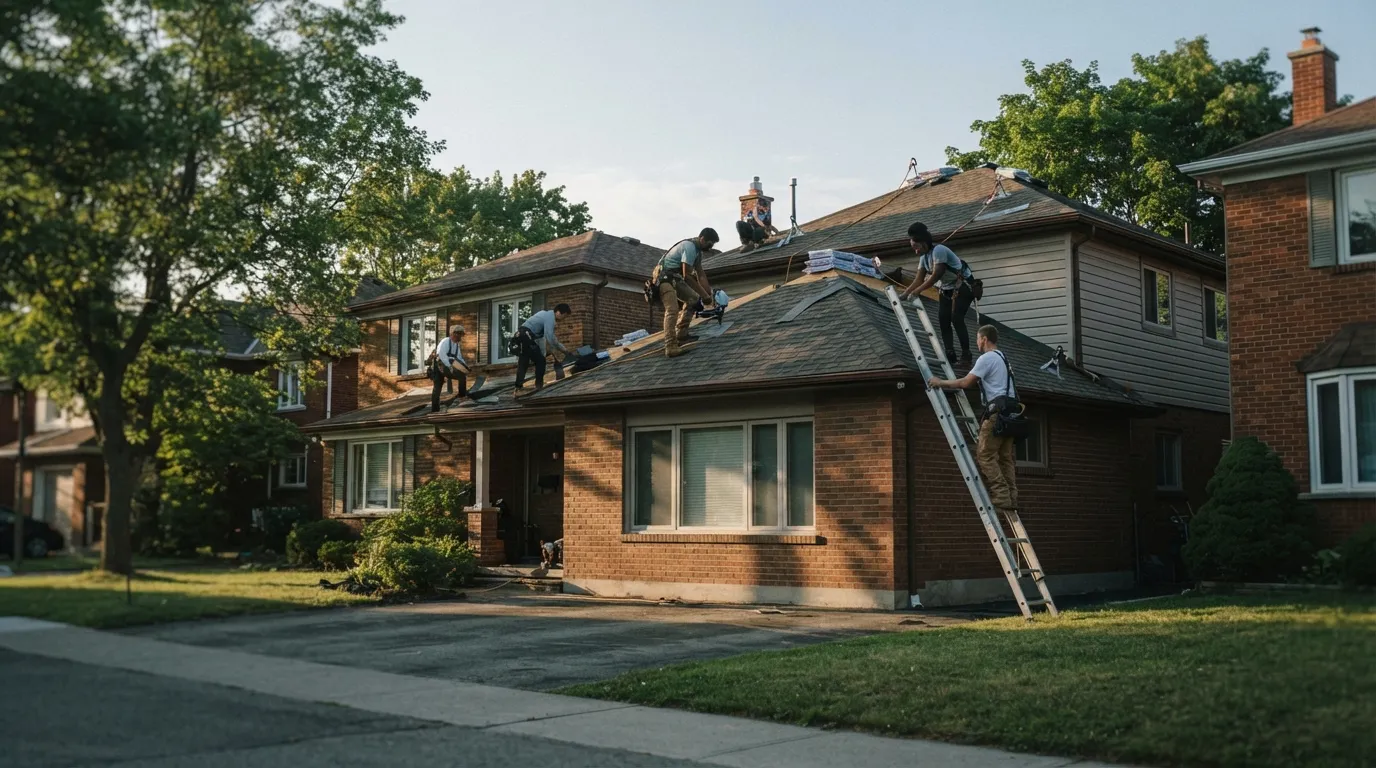
Request a no‑obligation flat & commercial roofing assessment in Toronto
Email Us for a Free EstimateProfessional Flat & commercial roofing Built for Toronto Conditions
Toronto’s cold winters, hot summers and heavy spring storms place specific demands on flat & commercial roofing systems. We design and specify systems to resist expansion, contraction and drainage issues so roofs perform through seasonal cycles. Our approach includes attention to vapour control, slope creation with tapered insulation and robust terminations around curbs and parapets. Below are the local factors that shape our recommendations for both residential flats and commercial buildings.
Climate stresses — freeze, thaw and UV
Freeze–thaw cycles in Toronto can force water into seams and flashings, and repeated expansion stresses welded and adhered joints. We favour seam techniques and membrane choices that tolerate thermal movement and specify UV‑resistant surface characteristics where rooftop exposure is high.
Housing stock and rooftop variety
From retail strips in Leslieville to low‑rise apartment blocks in North York, Toronto roofs vary widely in age, curb details and rooftop equipment. Older buildings may have nested flashings or non‑standard curbs that need custom metal work and careful termination details.
Permits, codes and neighbouring properties
Work on commercial buildings often requires coordination with the city for permits, and consideration of adjoining properties and shared drainage systems. We prepare drawings and can liaise with Toronto inspectors or neighbouring municipalities like Mississauga when projects cross property lines.
Workmanship standards and inspections
We follow accepted trade standards for membrane welding, flashing detail and insulation fastening so the installed system performs as intended. Post‑installation inspection and documented photos help with warranty claims and provide owners with a maintenance record for their building.

Weather is hard on your roof — email us for a same-day inspection.
Fall roofing conditions in Toronto, ON
Fall is the critical prep window around Toronto, ON: clear gutters, reseal flashing, and fix loose shingles before freeze-thaw and snow load arrive.
Proudly Serving Toronto, ON
Local, on-time service throughout Toronto and the surrounding area.